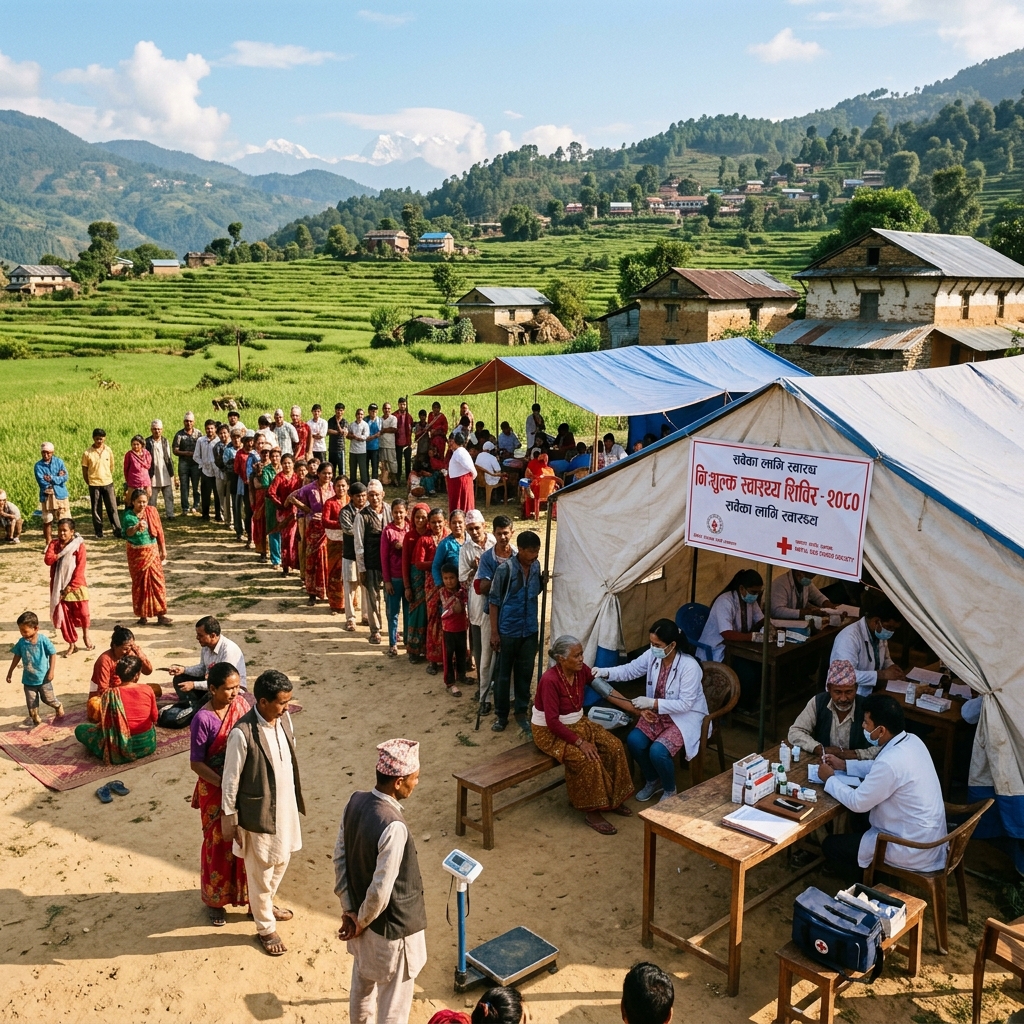
Every year, thousands of families in Mahottari face a devastating choice: travel 80 kilometers for basic healthcare or go without. The numbers are shocking, and the federal government can no longer look away.
In the heart of Madhesh Province, Mahottari district sits at a critical crossroads — not just geographically, but in terms of public health. With a population exceeding 600,000, the district has only 12 functional health posts serving its most remote communities. The gap between policy promises and ground reality has never been wider.
The Numbers That Should Keep Us Awake
Consider this: maternal mortality in rural Mahottari remains three times higher than the national average. Infant vaccination coverage hovers around 58%, while Kathmandu celebrates rates above 90%. These aren't just statistics — they represent mothers, children, and families who deserve better.
"When the nearest hospital is a day's journey away, every illness becomes a crisis. We don't need sympathy — we need infrastructure." — A community health volunteer from Gaushala
What Federal Investment Looks Like
During my tenure as Health Advisor, I witnessed firsthand how targeted federal spending transforms communities. The 'Healthy Madhesh' initiative proved that with the right allocation — just NPR 2.5 billion over three years — we can establish 50 new primary health centers across underserved areas.
Three Immediate Actions Needed
- Emergency health post upgrades in all 76 rural municipalities of Province 2
- Mobile health unit deployment for communities more than 20km from the nearest facility
- Federal matching grants for provincial health budgets, ensuring equitable distribution
The federal budget debate is approaching. This is our window of opportunity. I call upon every representative from Madhesh Province to unite behind a health-first agenda. Our people have waited long enough. The time for incremental promises is over — Mahottari needs action, and it needs it now.
I have already submitted a detailed proposal to the Health Ministry with costing breakdowns and implementation timelines. The blueprint exists. What we need now is the political will to execute it.